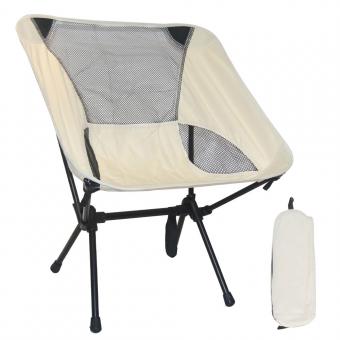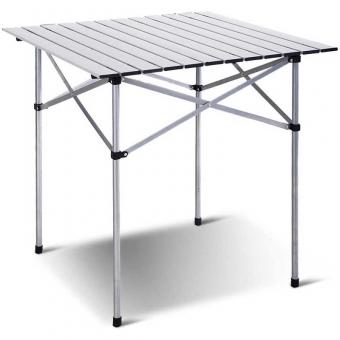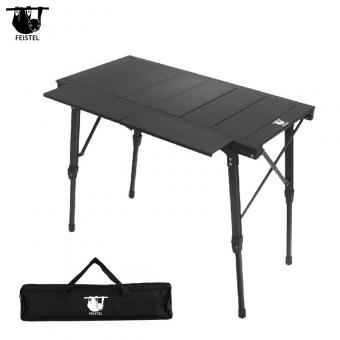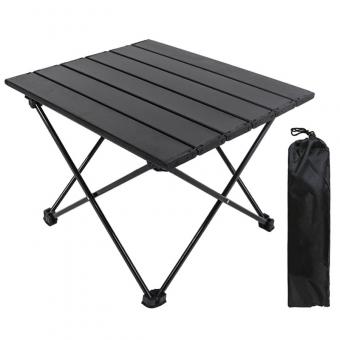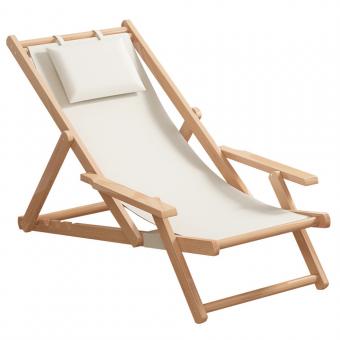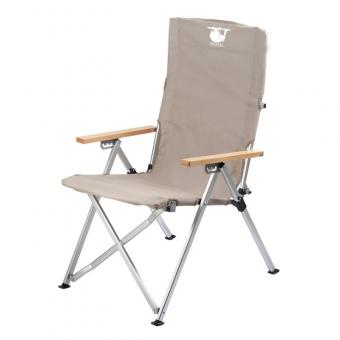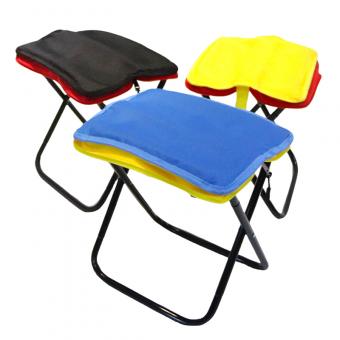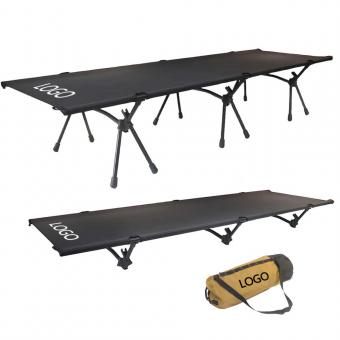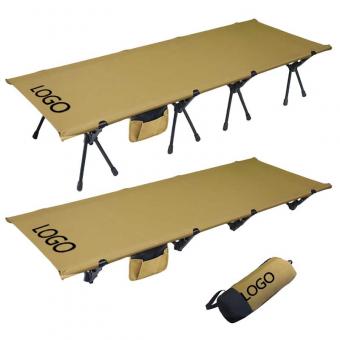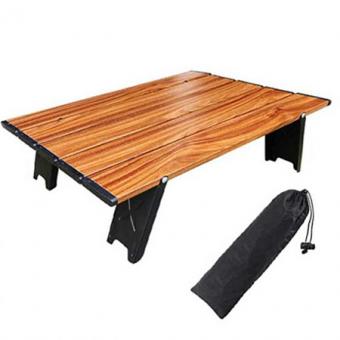
Merke : ANHUI FEISTEL FACTORY Relatert produksjon : OEM & ODM Produkt : Et lett, lite, sammenleggbart piknikbord perfekt for utendørsaktiviteter. Laget av slitesterke materialer, er den bærbar, enkel å sette opp.
neil velkommen til vår nettside!
lære mer
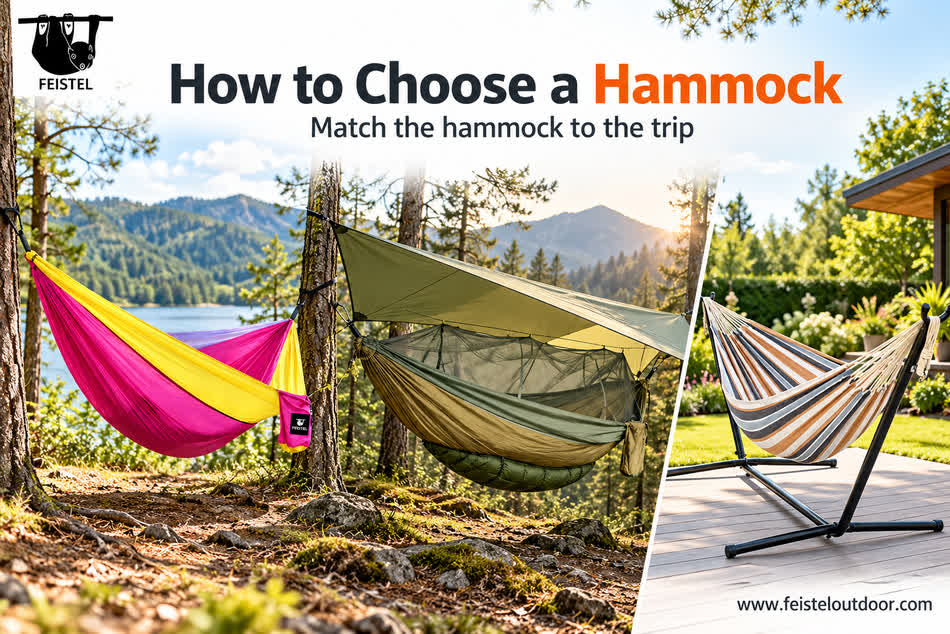 A practical manufacturer-informed buying guide for day trips, backpacking, sleeping outdoors, family recreation and wholesale sourcing.
At FEISTEL, we develop and export camping and outdoor products. This guide focuses on matching the actual hammock configuration to its intended user, environment and transport requirements rather than declaring one universal winner.
Choosing a hammock starts with the way it will be used, not with an impressive photograph or the promise of perfect sleep. For a short stop beside a trail, a compact fabric sling with dependable suspension might be enough. For a full night outdoors, the purchase expands into a sleep system: a hammock bed, appropriate suspension, protection from rain and insects, and insulation suited to the expected conditions. The decision changes again for a patio, family campground, or resort where a stand might be more important than shaving grams from a backpack.
A single hammock usually refers to a product intended for one person; a double hammock often gives more width for spacious solo positioning or shared lounging. A double-layer hammock describes something else: two fabric layers in the supporting bed. Names do not establish universal dimensions, comfort or tested capacity. Check the actual specification.
A comfortable diagonal posture depends on hammock length, width, sag and the sleeper's proportions. A larger bed may help some people, yet extra fabric can be inconvenient for others. The safest purchase is the one whose intended load, hardware and instructions are clear. At FEISTEL, we approach these questions as product-selection problems rather than promises that any one design suits everyone.
Picture the moment the hammock will first be used. Is it coming out of a backpack at lunchtime? Will someone spend a warm evening reading beside a parked vehicle? Is the sleeper counting on the hammock as the only shelter for several nights, when rain and cold air are possible? Those situations produce three very different shopping lists.
A day-use hammock needs a comfortable bed, a dependable way to attach it and a realistic carrying bag. An overnight system needs a plan for insects, rain, warmth and equipment storage. A backyard setup may make a stand or a softer furniture-style material worthwhile. Asking about intended use before fabric denier prevents many expensive mistakes.
There are other constraints that do not appear in product photos. The destination may prohibit hammocks or lack suitable anchor points. A person with limited mobility may find a low suspended bed difficult to enter. Someone accustomed to sleeping on their stomach may dislike a traditional gathered-end shape. A traveling couple may want to lounge together but sleep separately. These are not minor preferences. They determine which categories are worth considering.
Our practical advice is to write a one-sentence use case first: “One adult, overnight forest camping in spring, walking ten kilometers daily,” or “Two adults, shared afternoon rest beside a vehicle.” The best hammock becomes much easier to identify when that sentence is specific.
Hammocks can be classified by shape, construction, suspension and intended environment. Gathered-end hammocks are familiar flexible beds that narrow toward the two ends. They are frequently used for compact travel because the bed usually has no rigid spreader frame. Bridge hammocks use a different geometry, often with bars that create a more structured sleeping area. Spreader-bar leisure hammocks emphasize an open surface and may be paired with stands. Hammock chairs and suspended seats serve another purpose altogether.
These forms should not be described as versions of one universal design. A bridge hammock may behave more like a structured sleep surface, but the bars change packing and support requirements. A simple nylon sling may take very little space, but may not include overnight protection. A stand-supported hammock solves the absence of trees, while becoming much heavier and less appropriate for long-distance travel.
Retail titles can conceal these differences. “Travel,” “double,” “ultralight” and “camping” are useful cues, not complete engineering descriptions. Look for measurements, fabric type, included suspension and the actual use instructions. For buyers developing a private-label range, it helps to place different structural families into separate product groups. Otherwise an apparent comparison of comfort, price or packed mass may be comparing fundamentally different equipment.
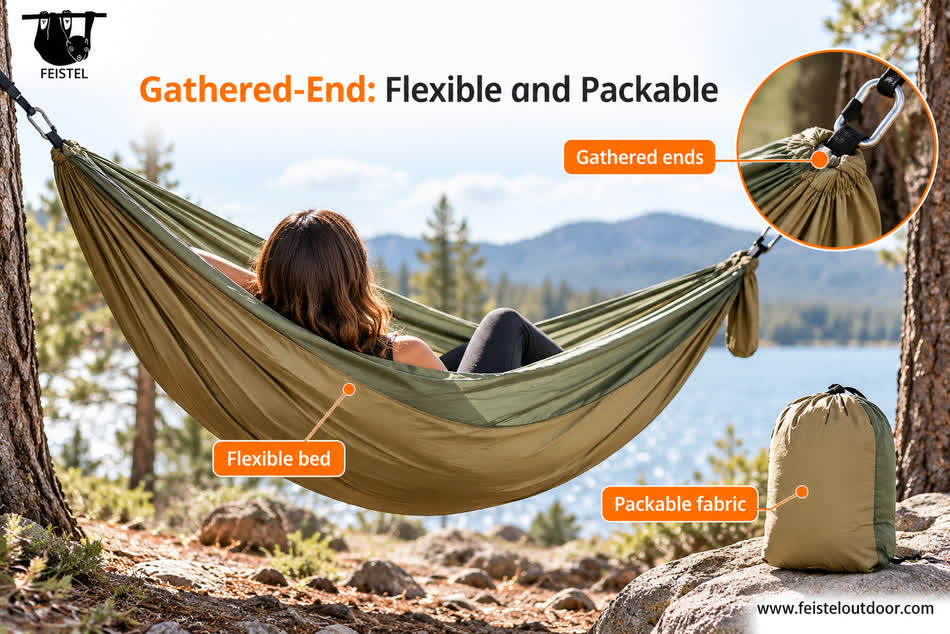
A gathered-end hammock begins as a broad piece of fabric that becomes narrower at both ends. The bed can be rolled or stuffed into a carry bag without rigid bars, which makes the construction attractive for portable outdoor use. The fabric supports the occupant over a changing curved area; suspension settings influence how it responds.
The simplicity is valuable but does not remove the need for appropriate fit. A short bed can feel restrictive to a tall sleeper, and an overly tight hang can increase tension in the supporting lines. People who are comfortable lying diagonally often appreciate the flexibility; people seeking a mattress-like platform may need more time to adjust. The direction of the diagonal, body position and amount of sag can all be changed.
We recommend treating a gathered-end hammock as a flexible system that must be set up, not as a static bed with a fixed geometry. Even the same fabric body may feel different between two campsites. For shoppers, that means the best demonstration is not a photograph of a perfectly stretched hammock. It is a properly hung sample occupied by a person whose height and body shape are reasonably similar to the intended user.
A practical product page should explain how the ends attach, whether straps are included and how the hammock is meant to be suspended.
Bridge hammocks use structural elements to hold the fabric in a more defined shape. Instead of relying solely on the gathered ends to establish the bed's contours, spreader components can create a relatively open central sleeping area. Some campers find this arrangement easier to understand than searching for the diagonal sweet spot in a gathered-end hammock.
The possible advantages have trade-offs. Bars and related hardware add mass, affect packed length and may require more attention when transporting and assembling the system. Insulation may also need to match the specific shape of the bridge bed. A standard accessory designed around a traditional gathered-end profile should not automatically be assumed compatible.
For someone comparing styles, the question is not simply whether bridge is “flatter.” It is whether the resulting support, packed configuration, anchor spacing and setup suit their needs. A person carrying equipment several days in a row may value the smaller and simpler gathered-end design. Someone traveling by vehicle may accept a more structured bed.
We would encourage buyers to ask for actual open and packed measurements and to try the intended sleeping position. Product construction influences comfort, but one geometry cannot be declared universally superior without a defined user group and evaluation.
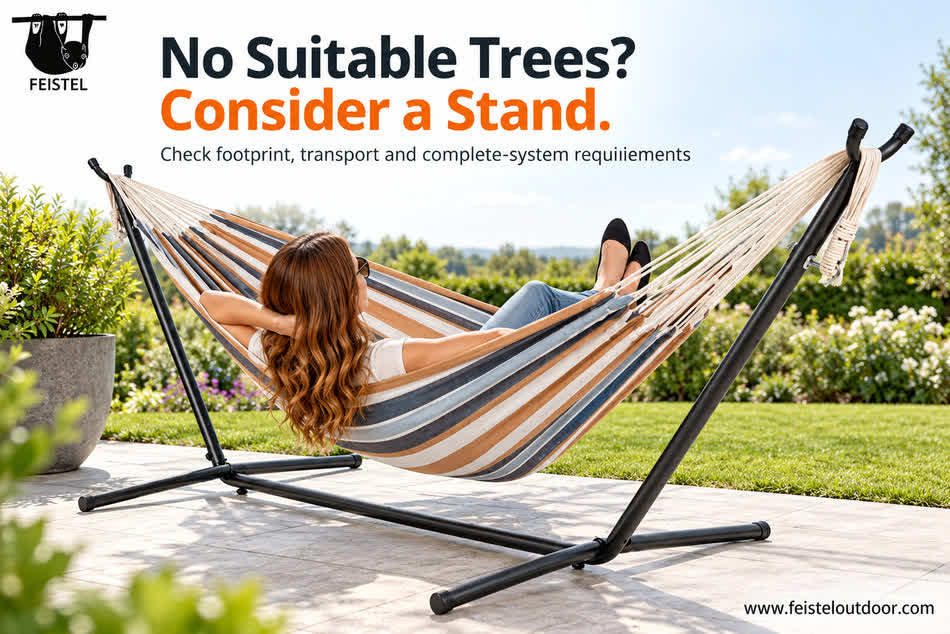
A stand becomes important when the intended location has no suitable trees, suitable anchors are too widely spaced, or attaching straps is prohibited. This often happens at beaches, open campsites, backyards and commercial leisure properties. The stand can make placement repeatable, but it also changes the transportation problem.
A steel or other rigid frame may require a vehicle and more storage space than two tree straps. Its feet need a suitable supporting surface, and the complete assembly must be used according to its instructions. The advertised capacity should apply to the actual combination of stand and bed, rather than being inferred from either component alone. Unverified balcony rails, fences and decorative posts are not substitutes for rated supports.
FEISTEL's portable hammock with stand is an example of the anchor-independent category within our hammock offering. Its published product-page specifications should be checked against the current SKU before commercial use. We would not compare a stand-supported leisure system to an ultralight gathered-end sling by weight alone. They solve distinct user problems.
In a retail guide, stands should be introduced as a separate decision branch: first determine whether suitable hanging anchors will exist, then evaluate the sleeping or lounging bed.
A hammock chair may be ideal for reading, short breaks or compact leisure spaces where an upright posture is preferred. It is not normally a substitute for a full-length suspended bed. The supporting geometry and loading assumptions differ, and a chair might use a single overhead attachment rather than two end supports.
The word hammock appears across many shapes in online catalogs. It can refer to a flat decorative seat, a suspended cocoon, a spreader-bar leisure bed or a minimalist backpacking sling. Confusing these formats is especially easy when buyers look only at lifestyle images or translated product titles.
Before approving a product, measure whether the user can actually extend the body in the intended direction, and inspect how the product is designed to be entered and exited. A design that works as a seat may not support the posture required for overnight sleep. Similarly, the fact that a product swings does not mean it is appropriate for dynamic play or for children without supervision.
The first rule of hammock buying is therefore not to pick the most attractive shape. It is to confirm the shape's intended function and the instructions that govern safe use. Specifications follow that decision.
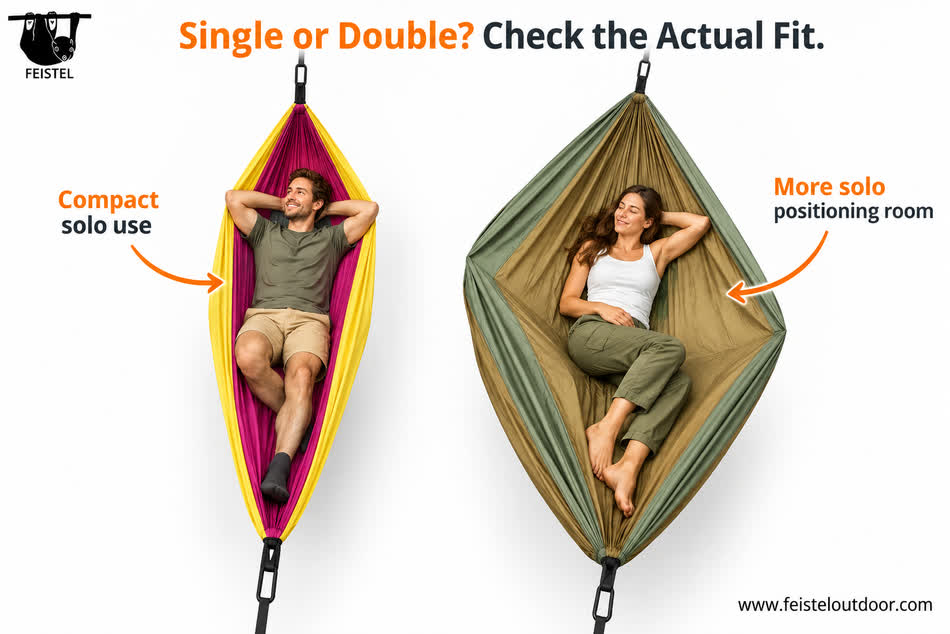
Single and double usually describe intended user count or fabric dimensions, but they are not universally standardized categories. One supplier may offer a long narrow single designed for a solitary sleeper; another may sell a shorter wide double for shared afternoon relaxation. Dimensions and intended use provide the useful information.
A wide double hammock can be attractive to one person. It offers additional lateral fabric for shifting the body and experimenting with a diagonal lie. Two people may also use a sufficiently designed double hammock for leisure where the combined load is within its stated limits. Yet uninterrupted two-person overnight sleep presents different challenges: bodies interact through the same flexible surface, and one person's movement affects the other.
Capacity is independent of the label. A double hammock is not automatically twice as strong, and a published number for the fabric bed should not be confused with the capability of every supplied connector or every tree chosen by the user.
We suggest treating single versus double as a fit and use decision. Ask whether the owner wants a compact solo resting place, more solo positioning room or actual shared lounging. Then verify the dimensions and finished-product rating. That order is more dependable than choosing based on the word printed in the product name.
A double hammock and a double-layer hammock are not the same thing. Double width commonly concerns the available bed area; double layer means that the supporting body contains two textile layers. A double-width hammock can have a single fabric layer, while a narrow single-user hammock may use two layers.
The second layer might be introduced for several reasons. It may change the occupied fabric stretch, provide a compatible compartment for a sleeping pad, or be part of a structure designed to meet an identified loading requirement. Whether it does these things well depends on the actual materials, openings, seams and assembled geometry.
Two layers do not guarantee double the safe capacity. Nor do two thin fabric sheets replace appropriate thermal insulation on a cold night. Some dual-layer constructions have no usable pocket for a thick inflatable pad, while others are deliberately designed around specific pad dimensions.
At FEISTEL, we recommend specifying width and layer count separately during product development. The same separation helps consumers read catalog descriptions accurately. A listing that says “double hammock” without identifying bed dimensions, fabric construction and intended use leaves important questions unanswered. A product titled “double-layer” should also explain what the second layer is meant to accomplish.
Length is often more important than new campers expect. A short gathered-end hammock gives less longitudinal space for creating a suitable sag and shifting into a diagonal position. Taller sleepers may find that their legs or shoulders remain too close to the gathered ends. Longer hammocks often provide adults with more positioning freedom, but there is no scientifically proven length that suits everyone.
Practical backpacking discussions frequently mention bodies around ten or eleven feet. That is a common design choice, not an anatomical law. A smaller camper may prefer a shorter model, while a tall person may want additional space. Width, fabric stretch and ridgeline configuration also affect the result.
Check what the published length actually measures. The fabric bed length may differ from the overall distance between hardware attachment points. A technical drawing should make those dimensions clear. For OEM development, the target height range should be defined before cutting patterns, and sample fitting should include representative users.
We advise customers not to buy a longer hammock simply to improve the specification sheet. Identify the sleeper and the position they want to achieve. A little extra length can be valuable when it creates usable room; unnecessary fabric may add weight without improving the experience.
Width governs the amount of lateral fabric available to the occupant. That matters in gathered-end designs because many campers use some of that space to lie diagonally rather than exactly along the centerline. A broad bed can also provide room to lounge with another person where permitted.
There are drawbacks. More fabric may add weight, create higher sidewalls and surround a smaller user's head or shoulders. Some people enjoy the enclosed cocoon sensation; others find it restrictive. Consequently, greater width should be described as additional positioning opportunity, not a guarantee of universally better sleep.
For a practical buying decision, consider the user's shoulder width, height, preferred posture and expected carrying distance. Ask how the hammock feels after an extended session, not merely how wide it looks laid flat on a showroom table. Flexible textile moves and drapes differently when occupied.
If you are designing a retail product, it may make more sense to offer two clearly differentiated widths than to label every hammock “extra large.” Explain what the width is for. Shoppers can make better decisions when the product page states the actual open dimensions and the intended experience instead of relying only on marketing adjectives.
Tall campers should investigate usable length first, then width. A bed that is satisfactory for a shorter person may push a tall user's legs into a fabric ridge or make the shoulders feel crowded. Increasing width without enough length may not solve those problems.
A representative fitting trial should look at the sleeper's actual diagonal posture. Can the head and feet remain comfortably away from gathered ends? Does the user need to flex the knees to avoid pressure? Can the shoulders settle without excessive sidewall contact? These questions are more informative than a generic “fits all adults” statement.
Other equipment must fit as well. A longer hammock may need suitable tarp coverage and suspension range. A wide or tall user may require different bottom insulation coverage. A large hammock is not a complete solution if its underquilt leaves the shoulders exposed.
At FEISTEL, our development recommendation is to define a target user-height range and evaluate the intended bed with people near the edges of that range. Without that information, broad comfort claims are difficult to interpret. The person buying the hammock deserves to know the dimensions and the assumptions behind the recommendation.
A smaller camper does not automatically benefit from the widest available bed. Extra fabric can rise around the face and make it more difficult to see outside or reach accessories. A lower occupied position can also make entry and exit awkward when the hammock has been hung too high or the suspension has been adjusted poorly.
Yet some smaller people enjoy a spacious, enclosed feeling, and there is no rule that they must buy a narrow single hammock. Personal preference and intended use matter. For a leisure hammock, relaxed posture may be the only goal. Overnight use introduces additional needs, such as reaching a zipper, positioning insulation and finding stable access in darkness.
During sample evaluation, we recommend checking the occupied bed rather than relying only on the unloaded measurements. Look at where the fabric sidewall reaches relative to the sleeper's face, whether they can sit into the hammock naturally, and whether they can adjust their sleeping position without excessive effort.
The value of a broader product range is that it can serve differing preferences without assuming that one size fits every body. Good product descriptions explain those choices rather than treating smaller dimensions as an inferior category.
A gathered-end hammock naturally forms a curved surface. Someone lying directly between the two gathered ends often feels a pronounced head-to-foot bend, sometimes called the banana position. Many experienced campers instead rotate the body diagonally across the fabric, moving the head toward one side and the feet toward the other.
The change can produce a less sharply curved effective sleeping line. It does not turn the textile into a rigid mattress, and it does not remove the need for an appropriate sag. The result depends on hammock length, width, the occupant's proportions and the fabric's behavior under load.
For a new user, experiment gradually. Hang the bed according to the manufacturer's guidance and settle into a natural sitting position. Lie back, then shift the torso and legs slightly across the diagonal. Notice whether the lower legs feel supported and whether the shoulders can relax. Try the other diagonal if the current orientation feels awkward.
Treat this as a technique to test, not a promise of perfect posture. If the hammock remains uncomfortable despite sensible setup adjustments, another geometry may suit the sleeper better. Comfort is influenced by the combination of product and use.
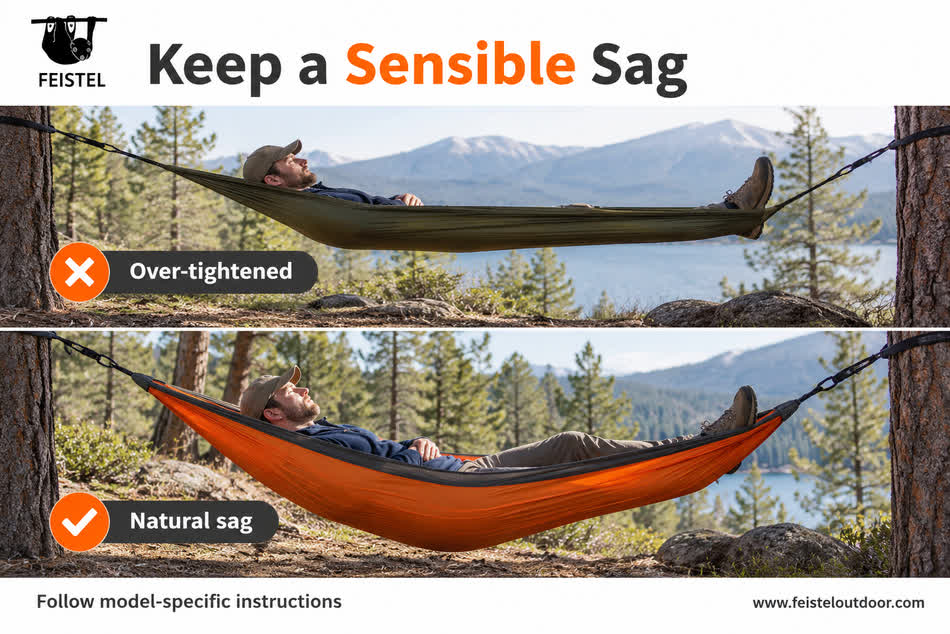
New users sometimes pull the suspension extremely tight because a taut line seems as though it should produce a flatter bed. A gathered-end hammock does not necessarily respond that way. Tight suspension changes the bed's curve and can increase loads in the supporting lines.
A moderate amount of sag often makes diagonal positioning easier. Experienced campers commonly refer to an approximate thirty-degree suspension angle as a useful starting visual cue, but the correct arrangement depends on the hammock model, anchor spacing, ridgeline and manufacturer instructions. Bridge designs and other specialized structures may require different geometry.
Physics also matters. In an ideal symmetric two-line suspension, the vertical components of both line tensions must balance the occupant's load. As the suspension approaches a horizontal direction, greater line tension is needed for the same support. Real systems introduce more complexity, but the basic relationship explains why extremely shallow angles deserve caution.
The practical task is to find a configuration that supports comfortable occupancy while respecting the intended installation conditions. Make small changes and observe their effects. Do not use an arbitrary angle as permission to ignore component ratings or unsuitable anchors.
An uncomfortable hammock is not always an unsuitable hammock. The suspended shape changes when the body moves, and localized fabric tension can create sensations that are easy to mistake for a material defect. Calf ridge describes a narrow line of tension beneath the calf or knee. Shoulder squeeze describes fabric pressing inward around the upper body. Neither symptom has one guaranteed cause.
Start by checking whether the hammock is properly installed. Next try a different diagonal position or move the torso slightly relative to the ends. If the lower legs still meet a pronounced ridge, the bed may be short for that occupant or the suspension may be overly tight. Shoulder pressure may reflect a narrow body, but an awkward position or sag can contribute too.
Avoid changing everything at once. If tree spacing, strap height, body location and insulation all change in one attempt, it becomes difficult to identify what helped. Make one adjustment, occupy the bed for several minutes, and compare the result.
For manufacturers, these observations should guide sample fitting. A soft textile cannot compensate for inadequate dimensions or poor geometry. Conversely, replacing an entire design may be unnecessary when a clear setup instruction resolves the issue. The appropriate response is based on the specific user and setup, not on a universal diagnosis.
A person's preferred sleep posture deserves attention before buying an overnight hammock. Back sleeping often feels intuitive in gathered-end designs because the body follows a broadly centered supported position. Side sleeping can also work, particularly in a sufficiently long hammock with a comfortable diagonal orientation. Some users like to bend the knees slightly, while others notice pressure at the shoulder or hip.
Dedicated stomach sleepers may find a traditional gathered-end bed less familiar. The flexible curve can put the torso and neck into a posture unlike a flat mattress. A different hammock geometry might be preferable, but this is a personal fit issue rather than a medical diagnosis. Try the design before depending on it for a multi-night trip.
It is tempting to claim that hammock sleeping corrects posture, improves spinal alignment or cures pain. Those claims require clinical evidence and cannot be established by simply liking the feeling of suspended fabric. The sensible claim is narrower: an appropriately sized hammock can provide a comfortable alternative surface for many users.
The time dimension matters too. A five-minute demonstration may not reveal what happens after several hours of movement, temperature change and equipment adjustment. Evaluate overnight use as overnight use.
Entry and exit influence how convenient a hammock feels throughout a trip. The bed should be installed at an appropriate height according to its instructions, allowing the user to sit naturally into the fabric rather than climb or jump onto it. A very high installation creates unnecessary fall distance; a bed hung too low may touch the ground when loaded.
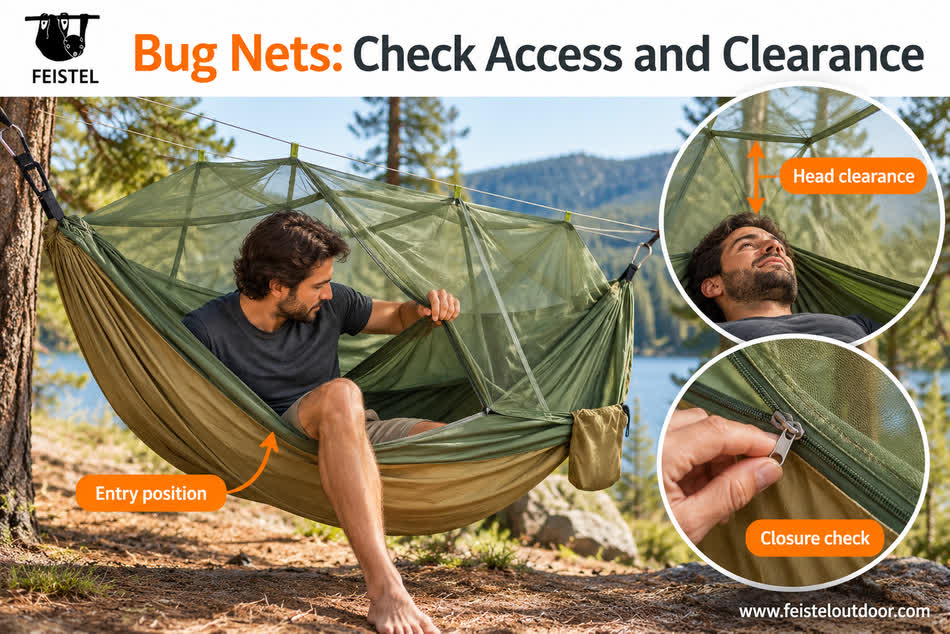
The presence of a mosquito net changes the process. A zipper placed near the natural sitting point can simplify access. A narrow entry may become inconvenient when the user is holding bedding or returning to the hammock in darkness. Netting should remain clear of the face after the occupant lies down.
Two-person use requires additional care. One occupant shifting or leaving changes the shape and balance experienced by the other. A shared hammock should be used only as intended and within the documented loading conditions. Children should not treat load-bearing hammock equipment as jumping apparatus.
For buyers testing a sample, entry and exit should be part of the evaluation—not an afterthought. Have representative users sit down, lie back, reach the closure, exit, and repeat. A design that feels excellent only after somebody else has arranged the bedding is not always practical for the customer who will use it independently.
Weight comparisons can become misleading because suppliers define the number differently. A listing might refer to the bare fabric body, the body with its attached bag, or the complete retail package including straps and connectors. An overnight shelter adds rain protection, insect protection and often insulation. Those items can materially change the weight carried to camp.
We recommend recording three separate figures. First, bare hammock weight. Second, packed product weight including every supplied component. Third, full trip-specific sleep-system weight. The third figure changes with weather and the accessories the camper already owns.
This distinction matters when people claim that hammock camping is always lighter than tent camping. A simple warm-weather sling can be very light, but a hammock combined with tarp, net, underquilt, top insulation, stakes and guylines is a much more substantial system. The fair comparison is between complete solutions that offer a similar level of shelter and warmth.
Packing shape also matters. A long rigid support might be inconvenient in luggage even if its mass is modest, while a fabric sling may disappear into a soft bag. Buyers should compare actual packed dimensions as well as grams. The winner depends on transportation, not only the scale.
For hikers carrying equipment over long distances, lower mass is valuable, but sleep comfort and protection remain essential. A narrow hammock can save fabric, yet a taller user may struggle to achieve a relaxed position. A spacious bed may be worth its extra weight when the person expects to spend the entire night in it. Neither decision can be made solely from the single or double label.
The suspension is another part of the weight budget. Simple webbing and hardware may be easy for beginners but heavier than specialized lightweight arrangements. That difference must be weighed against setup convenience. A system that saves a small amount of mass but takes more time to adjust when tired may be the wrong compromise for some users.
Plan for the actual weather rather than packing an idealized bare hammock. The expected overnight low temperature should influence insulation. Rain exposure determines tarp needs, and insects may make a net essential. A minimalist setup that works on a dry afternoon is not the same as an all-weather shelter.
At FEISTEL, our recommendation is to define an acceptable full-system weight after the user has selected appropriate dimensions and environmental protection. Trying to achieve the lowest published hammock-body figure first can lead to an unsuitable result.
People arriving by vehicle can afford different trade-offs. A wider bed, more generous tarp, easier straps and additional storage may contribute more to the experience than removing a small amount of weight. The hammock can serve both as a midday lounge and a nighttime bed, but those uses still require different accessories.
Car camping does not eliminate anchor problems. Managed campgrounds may restrict hanging, have trees spaced inconveniently, or lack healthy anchor points. A stand may become a more reliable choice for leisure use where the weight and storage are acceptable. It should be installed on an appropriate surface, following the stand's instructions.
The occupied hammock also needs room around it. A crowded campsite may have walking routes, branches or gear that interfere with safe entry and use. Consider where other people will pass and how the tarp or guylines are arranged.
For a family trip, a larger leisure hammock can be popular during the day. That does not make it suitable for unmonitored rough play. Clear instructions, sensible hanging height and appropriate supervision remain important. The best campground choice often comes down to practical convenience across several days, not to whichever fabric feels softest in a quick store demonstration.
A beginner may step into a hammock on a pleasant afternoon and assume the same equipment will be comfortable after sunset. The underside of a suspended sleeper is exposed to moving air, which can remove heat. A warm sleeping bag by itself may not solve the issue because the insulation directly beneath the body is compressed and loses much of its loft.
This is why experienced hammock campers discuss bottom insulation separately from upper insulation. A sleeping pad inside the bed or an underquilt outside it can provide the missing layer of thermal protection. The necessary insulation depends on actual overnight conditions, clothing and personal sensitivity.
The word “double layer” should not be mistaken for “winter ready.” Two thin textile sheets may affect fabric feel or provide a pad compartment, but they do not establish a temperature rating for the system. A buyer planning cold-weather trips needs a specific insulation strategy.
Weather can also change after the hammock has been pitched. Wind may increase underside cooling, while shifting rain can affect exposed gear. Planning the full system before leaving home is more reliable than treating insulation as an optional accessory to consider only after the first uncomfortable night.
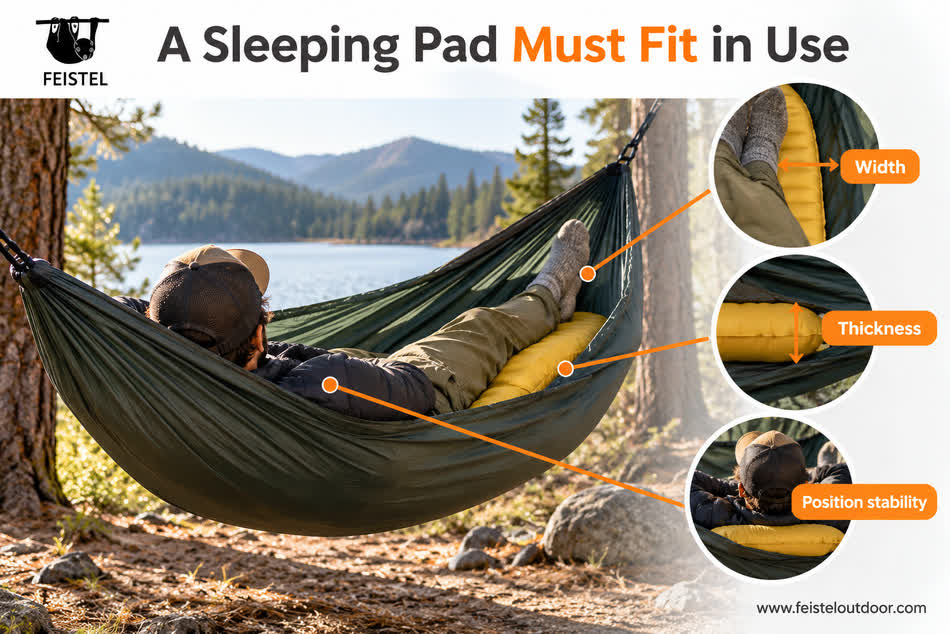
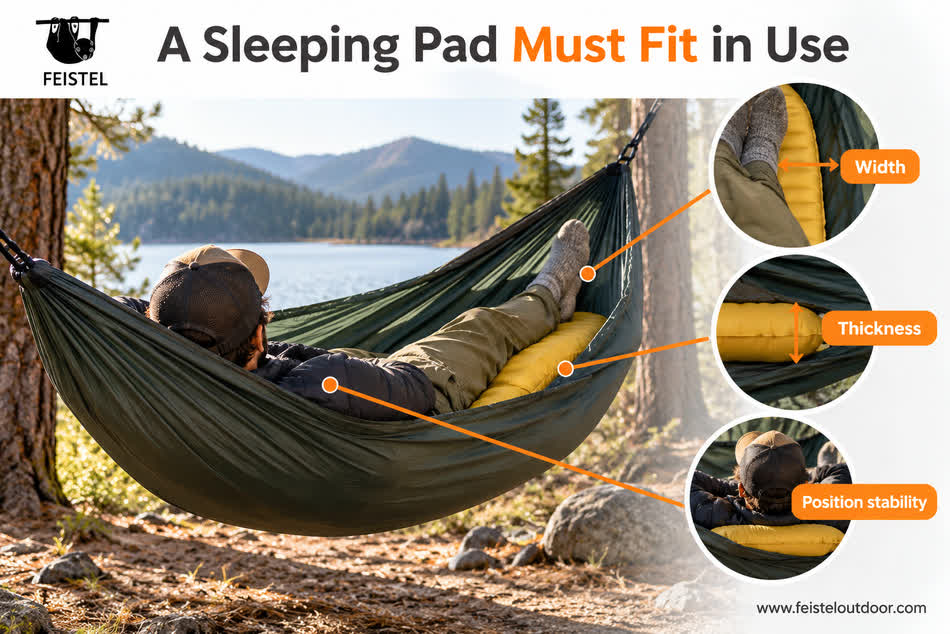
Sleeping pads are familiar to many campers and can be used on the ground if hammock hanging becomes impossible. That makes them attractive to someone testing suspended camping for the first time. But a ground pad does not always sit naturally inside curved flexible fabric.
Narrow pads may leave shoulders exposed; broad stiff pads may resist the shape of the bed. Some inflatable pads slide as the sleeper moves. A double-layer hammock may help keep a compatible pad positioned, but only when the construction provides a usable compartment of appropriate size. Two fabric layers sewn tightly together do not automatically create a pad pocket.
Before purchasing a pad specifically for a hammock, check the bed's dimensions, the intended diagonal position, the pad's thickness and the installation method. Test the arrangement under realistic loading. A combination that looks acceptable when empty may behave differently once someone lies down.
If the camper already owns a suitable pad, it may be sensible to start with that equipment rather than buying a specialized insulation system immediately. The user can later decide whether a different shape or underquilt would improve the experience. Comfort comparisons should reflect the complete arrangement actually used.
An underquilt is suspended below the hammock so that its insulating material can retain loft instead of being compressed beneath the occupant. A good fit allows the quilt to follow the bed's underside while avoiding gaps that admit cold air. This can feel more natural to campers who dislike having a rigid or slippery pad inside the bed.
However, an underquilt is not automatically successful simply because it is attached. Position, end adjustment, side coverage and the changing shape of the occupied hammock matter. A quilt hanging too loosely may leave a draft. One pulled too tightly may compress the insulation or interfere with the fabric bed.
Compatibility also varies across hammock geometries. A product designed for one gathered-end shape may not fit a bridge hammock or another model as intended. The camper should check dimensions and manufacturer guidance rather than assuming all quilts attach in the same way.
The weight and cost of the quilt belong in the total shelter comparison. For some trips, a pad provides more versatility; for others, an underquilt is worth carrying. The right decision reflects expected temperatures, existing equipment, and personal preference—not the idea that one method is always more comfortable.
Bottom insulation addresses only one direction of heat loss. A camper also needs appropriate cover above and around the body when temperatures require it. A conventional sleeping bag can work in a hammock, although getting into it and closing the zipper inside a flexible bed may feel awkward. Some campers prefer a top quilt that provides upper insulation without the material that would be compressed underneath.
The choice should be made alongside the bottom insulation. A high-rated sleeping bag will not necessarily keep the sleeper comfortable if cold air circulates under the hammock. Conversely, excellent underside insulation will not help enough when the upper body lacks coverage in cold weather.
Temperature ratings are references rather than promises of individual comfort. Wind, humidity, metabolism, clothing, fit and the actual campsite influence the result. A user who feels cold easily may choose more insulation than another user in the same conditions.
At FEISTEL, we advise describing exactly what is included with a hammock and what extra insulation may be needed. A customer receiving a compact nylon bed should not discover during the first night that the product was never intended to function as a complete cold-weather sleeping system on its own.
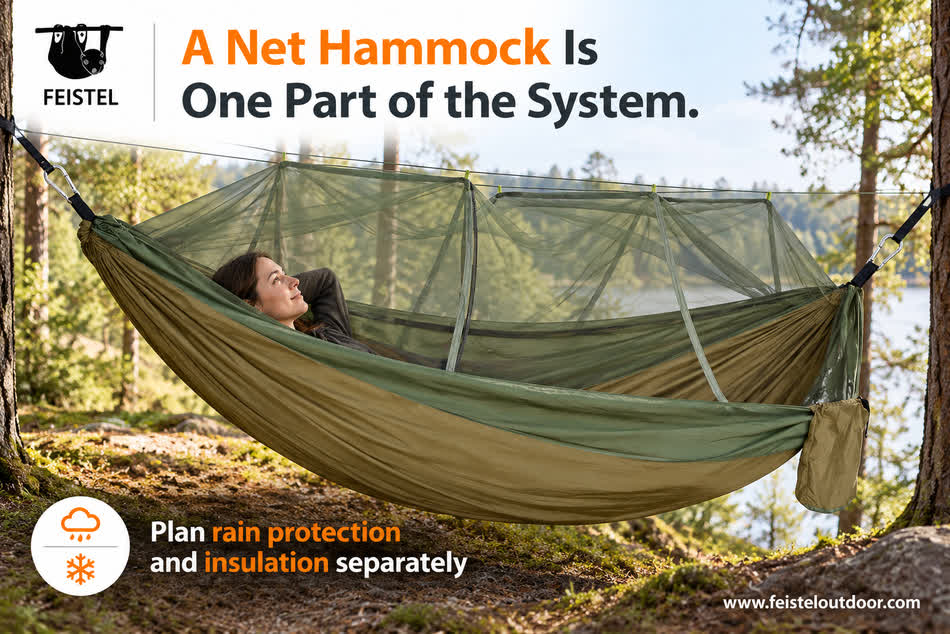
Insects can turn an otherwise comfortable hammock into a poor place to sleep. In areas with persistent mosquitoes, a suitable net can be more valuable than additional bed width or a softer textile. Protection should be considered while choosing the hammock, not only after the campsite has been selected.
Integrated nets reduce the number of separate components, but zipper placement, entry size and internal clearance matter. A net touching the face can be uncomfortable, and poorly closed openings can undermine the intended protection. Removable nets provide flexibility for insect-free seasons; independent enclosures may be compatible with several beds, subject to their dimensions and hanging arrangements.
The presence of a second fabric layer does not prove complete protection against biting insects. The bed, entry openings, netting and overall installation work together. Claims about insect resistance should be limited to what the particular construction and evidence support.
FEISTEL's double mosquito-net hammock provides an example of how insect protection can shape a product concept. The current SKU's exact mesh, closure and accessory specifications should be checked before publication or procurement.
A hammock suspended between trees is not automatically a weatherproof shelter. Overnight campers should consider a tarp or other purpose-designed overhead protection whenever rain is possible. The coverage required depends on the hammock's suspended length, pitch, surrounding exposure and likely wind direction.
Different tarp geometries offer different balances. Smaller asymmetric covers may save weight but leave less margin against angled precipitation. More generous rectangular or shaped tarps can create covered space for gear and give the user room to change clothes or move around near the bed. Doors can add protection in exposed conditions while increasing the amount of material to manage.
Do not judge coverage from an isolated product photograph. The actual ridgeline length, tarp orientation and side pitch determine what remains protected. Rain can be driven sideways, and water may travel along suspension components unless the system is arranged appropriately.
For a beginner, practicing tarp installation is as important as practicing hammock adjustment. It is better to understand the sequence during dry weather than to learn in a storm. The complete shelter should be evaluated in the conditions it is expected to handle, within manufacturer limits.
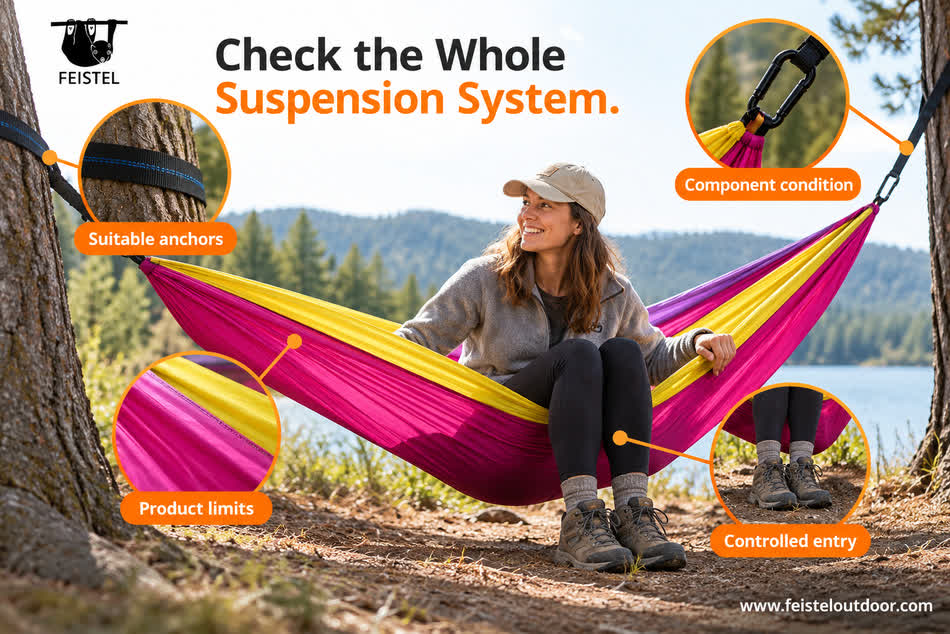
The campsite determines whether a hammock can be used at all. Look for suitable, permitted anchors before unpacking the bed. Healthy trees of appropriate strength and spacing are central to a tree-suspended system, but their suitability should not be guessed merely from appearance. Avoid damaged trunks, dead branches and locations where a fall could place the user on hazardous objects.
Pay attention to the environment around the space. Is there a walking route under the suspension? Could someone trip on a guyline? Are there unstable branches overhead, damaged ground or other hazards nearby? Will the prevailing wind drive rain beneath the tarp? A location that looks scenic may be inconvenient or unsafe for a sleeping shelter.
Local land-manager rules may prohibit hammocks or specify suspension practices. Following those rules is part of responsible camping. Where trees are absent or unsuitable, use a properly designed alternative support system if the destination permits it.
A good campsite is not necessarily the one with the widest tree spacing. It is the one that provides appropriate anchors, manageable installation geometry, weather considerations and enough free area for the camper to enter and exit safely. Site choice and product choice cannot be separated.
Straps, cords and specialized adjustable lines all connect the hammock body to anchors, but their handling and environmental characteristics differ. Wide webbing can distribute contact forces over a greater area than thin rope under comparable loading, which helps explain why many recreation managers prefer straps. Nevertheless, no strap width guarantees protection of every tree species or permits hanging where local rules prohibit it.
Looped straps can be simple for beginners because the adjustment points are visible. Other systems use buckles or adjustable spliced lines to reduce weight or provide finer control. Some require practice with knots or careful attention to hardware orientation. The best system is one the user can install correctly and inspect reliably.
Every component needs to be appropriate for the intended suspended load. Do not assume a small accessory carabiner designed for organizing keys is suitable for supporting a person. Hardware, end loops, straps and anchors form one system, and its practical limits are not decided solely by the rating shown on the fabric bed.
Product listings should identify whether straps and connectors are included. An inexpensive hammock without its required suspension may not be the most convenient or lowest-cost complete option.
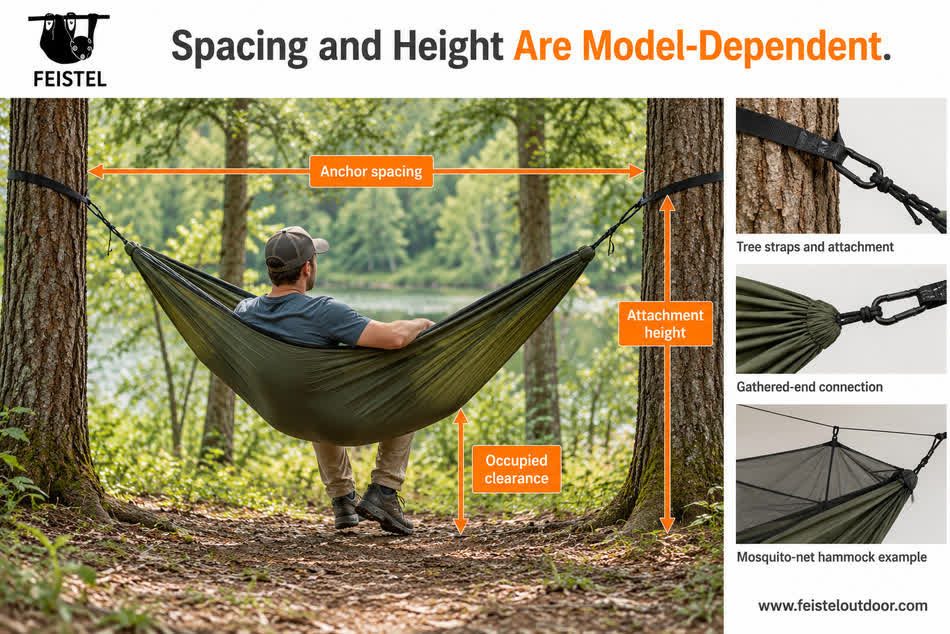
There is no universal tree distance that works for every hammock. A compact gathered-end sling, a long overnight bed and a bridge hammock can require different available spans. Strap length, attachment height, desired sag and accessory configuration all change the installation.
Some guides offer a single range for tree separation, but that should be treated as an example for particular designs rather than a global standard. Measure the actual bed and learn the useful range of its suspension before traveling. An adjustable system can accommodate more locations, provided the anchors and installation remain appropriate.
Height deserves similar care. A bed placed unnecessarily high creates greater fall consequences. One hung too low may touch the ground after the occupant's weight is applied. The correct approach is to follow the product instructions and position the occupied bed for practical entry, exit and ground clearance.
The safest setup is not one that looks dramatic in a photograph. It is one whose supports are appropriate, hardware is correctly installed, and usable height suits the person. For overnight camping, the rain tarp and lines must also fit the location without interfering with movement through the campsite.
Some hammocks use a structural ridgeline connecting the ends of the bed. Depending on the design, it can limit the distance between gathered ends and make the sag more consistent across varying anchor arrangements. This can help a user reproduce a comfortable setup rather than finding the same position again from scratch every evening.
Not every cord above a hammock is structural. A separate line may simply support netting or hold a small organizer. These uses should not be confused, and the line should not be loaded beyond its intended purpose.
A structural ridgeline also does not remove the need to consider tree spacing, strap ratings and installation height. It controls part of the bed geometry; it does not make an unsuitable anchor safe. Some simple leisure hammocks work well without one, and bridge-style products may rely on different geometry.
During product development, decide what problem the ridgeline is intended to solve. Is it for repeatable sag, net support, or accessories? Specify it accordingly. A technical feature becomes useful only when its function is clear in the instructions and consistent with the overall construction.
The fabric body often receives most of the attention in product photographs, but the small connecting parts matter enormously. A load passes through the textile, gathered ends, loops or other terminations, hardware, suspension and anchors. Failure or misuse at any relevant point can undermine the entire arrangement.
Buyers should ask what type of connectors are included, which applications they are designed for, and what documentation supports important load claims. A metal appearance or large size does not establish adequate performance. Gate design, material, manufacturing and wear can all matter depending on the component.
Connections also influence usability. Hardware that is difficult to orient or manipulate may frustrate beginners. Conversely, adding large metal parts to a minimal hammock can increase packing weight. The optimum arrangement depends on the intended user and environment.
For wholesale programs, the exact connectors included with the sample should appear on the final specification. Replacing a component with a cheaper-looking equivalent during procurement may create an undocumented structural difference. A responsible supplier should evaluate that change instead of assuming the components are interchangeable.
Published weight capacity is not a comfort score and should not be treated as a universal safety promise. A person may fall within a listed capacity yet find the bed too short or narrow. Conversely, an exceptionally wide bed may still have a modest stated rating. The underlying construction determines the permitted use.
Ask whether the published figure describes the bed alone or a complete kit with its supplied straps and connectors. Check whether the relevant report applies to the exact SKU. A capacity based on a static condition does not establish unlimited durability under repeated impacts, and jumping into a hammock can create loading different from carefully sitting down.
The anchors belong in the real system too. A rated hammock cannot make a weak tree or improvised fence post appropriate. The manufacturer should provide clear restrictions, while users should follow them and inspect equipment before use.
At FEISTEL, we recommend phrasing unverified catalog numbers as “published” or “stated” rather than claiming a laboratory result that has not been supplied. Honest boundaries matter more than competing for the largest figure in a search snippet. Safe selection begins with the exact intended use.
Lightweight nylon is common in portable hammocks because it can produce a flexible bed that packs into a small bag. Terms such as “parachute nylon” signal a general style of woven synthetic textile rather than a complete list of strength and environmental performance characteristics.
A buyer should consider the actual polymer, finished fabric weight, weave, yarn, coating, seam design and quality of connections. Two products described with the same broad material term may have different stretch, hand feel, resistance to abrasion and loading behavior. A glossy photo cannot resolve those differences.
During warm-weather lounging, nylon can feel pleasant and easy to carry. At night, the material itself provides limited thermal insulation, so the complete sleep setup becomes essential in cool weather. After exposure to moisture, the product should be cleaned and dried according to its actual care instructions.
For OEM development, the material name is a starting point. The meaningful specification lists the fabric construction and the performance requirements the finished product must meet. We would avoid describing any fabric as unbreakable, waterproof or suitable for an unlimited service life without product-specific supporting evidence.
The designation 210T is commonly used as a textile construction descriptor. It is not interchangeable with a finished-product weight limit, and it does not independently tell a buyer the tear resistance, coating performance or lifespan of a hammock. Exact textile definitions and measurement methods should be confirmed in the supplier's fabric specification.
A consumer may understandably assume that a larger material number means a stronger hammock. That shortcut is unreliable. Yarn type, fiber properties, weaving method, finished fabric weight, seam construction and end reinforcement all influence performance. The bed must be evaluated as part of its assembly.
This distinction is particularly relevant to FEISTEL's published 300 × 200 cm double hammock, whose product page describes 210T parachute nylon. The size and material description are useful product facts. They should not be converted into an invented tensile strength or a blanket lifetime guarantee.
For a brand purchasing customized hammocks, request the fabric specification and any required test results before approving a material substitution. Seemingly similar fabrics may not behave identically once cut, sewn and suspended under the same conditions.
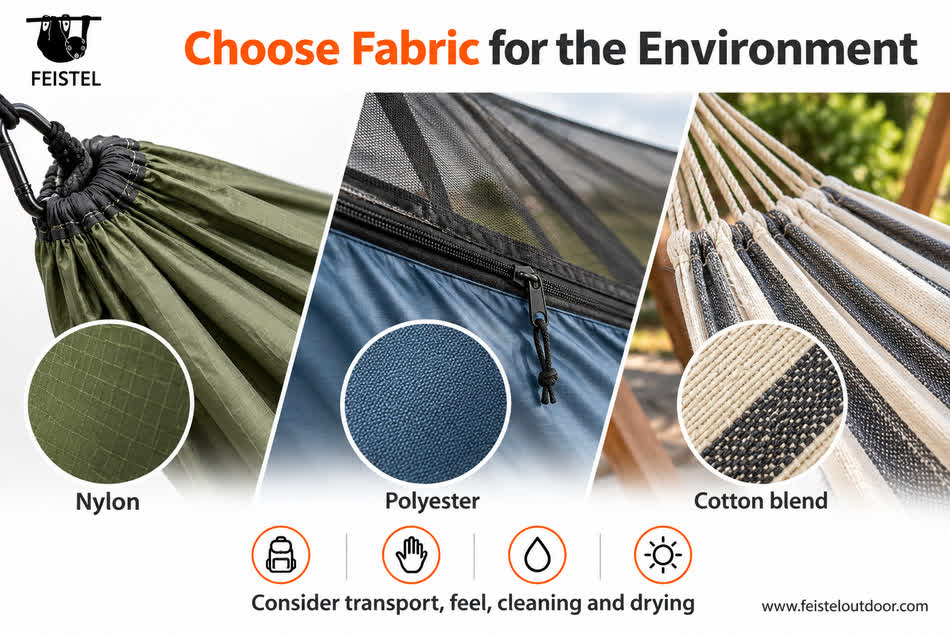
Nylon and polyester both appear in portable outdoor textiles, while cotton and cotton-blend materials are common in leisure settings. Each family has useful qualities, but broad statements that one fiber is always softer, stronger or more weatherproof are unreliable without a specific construction.
Cotton can feel pleasant against the skin and suit a dry patio or leisure environment. It may absorb moisture and become heavier, which can be inconvenient during unpredictable backpacking weather. Many nylon constructions offer compact packing and useful flexibility. Polyester fabrics can behave differently in relation to moisture, stretch and sunlight exposure. Coatings and finishes may change those comparisons.
A garment-like fabric sensation during a short demonstration does not establish long-term body support. Seam placement and occupied fabric tension also matter. Similarly, textile behavior in a laboratory specimen does not by itself establish the endurance of the final hammock.
Choose a material after defining weather, carrying distance, cleaning requirements, user preferences and product price range. At FEISTEL, we suggest keeping those practical requirements visible during textile selection rather than making decisions from an isolated fiber name. It is the finished construction, not the marketing category alone, that customers ultimately use.
Ripstop refers to a woven reinforcement concept intended to influence how certain tears propagate. It does not mean that a fabric cannot tear, and it does not remove the need to inspect seams or avoid sharp objects. Similarly, denier describes a yarn measurement and should not be used as a complete durability rating.
A hammock textile is exposed to distributed body pressure, occasional concentrated contact, abrasion during packing, moisture and sunlight. Different test methods address different properties. Tensile strength and tear resistance are not identical. Abrasion performance does not establish how the fabric behaves at a stitched loop. UV-related aging may alter the material over time, depending on composition and exposure.
A specification may list several impressive values, but the question is whether they are relevant to the customer's use and the finished product. For a lightweight recreational hammock, the buyer may prioritize packing efficiency and sufficient verified capacity. For a high-use commercial setting, inspection and serviceability can matter more.
We recommend describing actual measured fabric characteristics where documentation exists and avoiding absolute words such as “tear-proof” or “lifetime strength.” Those promises simplify a complex material problem in a way that can mislead buyers.
The large central fabric panel supports the occupant over a broad area, but loads ultimately move toward smaller end connections. That transfer makes stitching, folded hems, end loops and reinforcement important. A beautifully colored fabric does not compensate for poorly executed attachments.
Construction can also affect comfort. A raised seam running under a shoulder or leg may become noticeable after an extended period in the bed. A stiff reinforcement placed near an ordinary body-contact area may create a local pressure point. The fabric looks different on a cutting table from the way it behaves after being suspended and occupied.
For single- and double-layer designs, the relationship between fabrics deserves attention. Different stretch characteristics can mean that two layers do not share loading evenly. Whether a seam joins both layers and how the bed is gathered may alter the result.
At FEISTEL, our recommendation for a custom project is to approve the exact construction drawing and then evaluate the resulting sample. Ask the supplier to identify the load-bearing details, not merely the broad fabric type. If the design changes after approval, its effect on the finished assembly should be assessed.
A solo user may choose a double-width hammock for the simple reason that more fabric creates more options. It can provide greater lateral space, support different diagonal postures and allow the person to sit across the bed instead of remaining in one narrow position. For a camper using the hammock as a daytime lounge and occasional sleeping place, that flexibility can be appealing.
However, a wide bed is not automatically the best solo design. The larger sidewalls may rise around a smaller occupant, and the additional fabric has to be carried, dried and repacked. A shorter wide bed may also remain uncomfortable for a tall person who needs more length.
Rather than telling solo shoppers to always select a double, ask what they dislike about their current setup. If the problem is restricted shoulders or lack of diagonal room, greater width might help. If the problem is a calf ridge created by an overly tight hang, adjustment may be more important. If the problem is cold, extra width will not replace underside insulation.
We recommend describing the additional space as a useful characteristic for particular preferences, not as proof of universal ergonomic superiority. Product fit remains personal and should be assessed in the occupied configuration.
A couple sharing one hammock during a picnic may enjoy the closeness and gentle movement. The same arrangement can become less convenient across a full night. Two bodies occupy a connected flexible surface, so one person's movement changes the tension and position experienced by the other. Both users may drift toward the lowest part of the bed.
Two separate hammocks allow each person to choose a sleeping position, adjust insulation and move without shifting the other's support. They also allow different hammock lengths or fabrics where the users have different body dimensions. The trade-off is additional equipment, more suitable anchor points, and potentially more setup time.
A product described as double is not necessarily approved for unrestricted two-person use. The stated limit, included hardware and installation instructions must be respected. An extra-wide appearance should never be used to justify exceeding a rating.
Before purchasing a shared overnight system, the couple should think realistically about sleeping habits. Does either person wake when the other moves? Do they prefer different temperatures? Are there enough permitted anchor locations? These questions often provide a better answer than a generic claim that double hammocks are made for couples.
A family campsite can turn a hammock into a popular place for reading and resting. That popularity also makes instructions important. Hammocks are load-bearing products, not jumping equipment, and an adult-sized bed should not automatically be considered suitable for unsupervised children's play.
For family use, convenient entry, reasonable occupied height, cleanable fabric and easy inspection may be more important than technical overnight features. A caregiver should be able to confirm that the suspension is intact and the setting is free from obvious hazards. If the product is intended for a child, its own instructions and appropriate supervision govern use.
The word “family” in a title does not establish a universal number of simultaneous users. A household might buy one wide bed for members to use in turn, or several separate hammocks for different people. Those are different loading and comfort scenarios.
Retailers can help by showing the actual product dimensions and stating restrictions clearly. Attractive photographs should not imply rough play, unsafe heights or support from unsuitable structures. Good family guidance focuses on practical use and safety instead of claiming the fabric will hold any group that fits inside it.
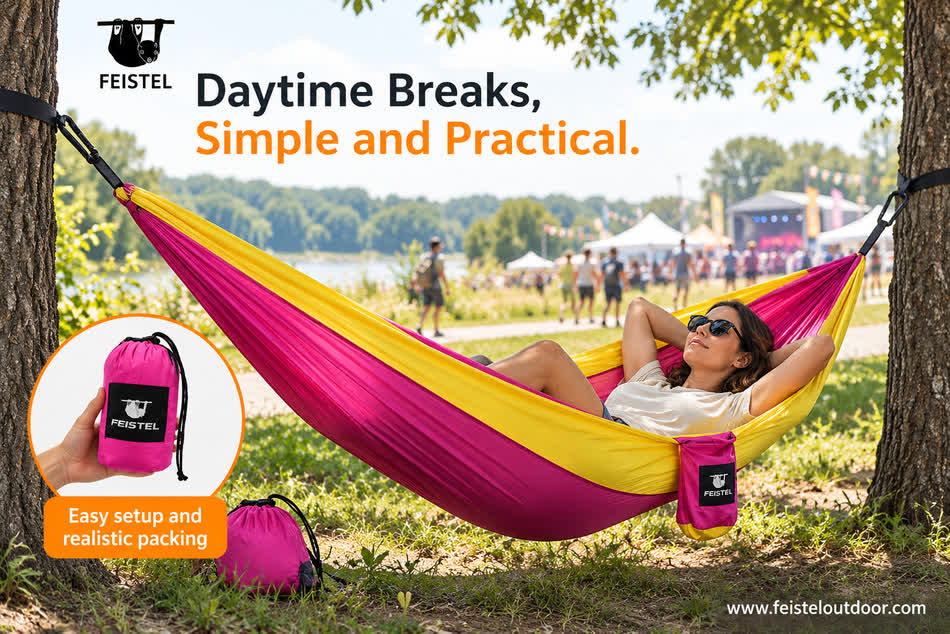
For many users, a hammock is not an overnight shelter at all. It is a portable place to sit or lie during a festival, picnic, fishing outing or rest stop. That changes the decision. Bottom insulation and a large storm tarp may be unnecessary in settled daytime weather, while ease of setup and compact packing become more prominent.
A simple gathered-end sling with suitable straps may be the most efficient product for this purpose. A wider version may feel welcoming for someone who likes to stretch or lounge with another person where permitted. A stand may be practical when the venue has no approved hanging anchors, although the frame adds substantial transport demands.
Do not assume a venue permits hanging simply because it has trees. Rules, crowd movement, and the condition of the anchors matter. A hammock placed across a walkway or suspended from decorative fixtures is not appropriate.
For an event-oriented retail product, clear instructions and realistic bag dimensions deserve attention. The owner may put the hammock away repeatedly in one day. A bag that is too tight, connectors that are difficult to operate, or a confusing strap system can undermine the experience even when the fabric itself is comfortable.
Warm, humid environments create a different set of priorities. Airflow around a suspended hammock can feel refreshing during the day, but mosquitoes, sudden rain and damp storage may complicate overnight use. The camper should assess the complete environment instead of choosing a bed only because it feels cool to touch.
A suitable insect net can be highly valuable. It needs adequate clearance, accessible closures and a fit that prevents obvious gaps when installed. A tarp may also be required, but its position should allow practical ventilation while providing the necessary weather protection. Local conditions determine the balance.
Synthetic textiles can be convenient to carry, yet repeated exposure to moisture still requires appropriate cleaning and drying. A hammock packed damp after a storm should not remain closed indefinitely. Any hardware exposed to salt-containing air or moisture deserves inspection according to its material and finish.
For FEISTEL wholesale buyers serving tropical destinations, we would prioritize clarity about the accessories included, the design of the net entrance and the portability of the full protection system. A wider fabric bed may improve fit, but it will not solve insect or rain problems by itself.
Cold-weather hammock use demands planning before departure. An occupant is suspended above the ground, and moving air can remove heat from beneath the body. The compressed underside of a sleeping bag provides less loft than the upper portion. A pad or correctly fitted underquilt is therefore often part of the overnight system.
The user should consider more than the forecast daytime high. Overnight lows, wind, dampness and personal temperature sensitivity change the necessary insulation. The rain tarp may need to be pitched differently in exposed conditions, while keeping access manageable. A bug net may or may not be necessary depending on season and location.
A double-layer hammock can be useful if its construction provides a compatible pad space, but it does not automatically become an insulated winter product. The second fabric layer is not a substitute for a temperature-appropriate sleep system.
Buyers should ask the supplier what the package includes and what additional equipment will be required. This is a particularly important distinction for first-time campers who are attracted to lightweight hammock photographs but do not realize that a simple sling is only one part of the overnight arrangement.
Beach photographs can make hammock hanging appear effortless, but coastlines often lack suitable trees or approved anchors. Sand, wind, salt-containing moisture and local regulations all affect the arrangement. A stand may be preferable in certain vehicle-accessible settings, but it must be installed according to its design and on a suitable surface.
For tree-suspended use, check whether the available vegetation is permitted and appropriate. Do not improvise anchor points on fragile structures or public fittings. For stand-supported use, assess stability and the space needed around the frame. Strong winds can affect tarps and unoccupied equipment.
Coastal exposure also influences care. Sand should be cleared from relevant hardware, while wet textile and metal parts should be dried as instructed. It would be misleading to promise that any nylon hammock or metal stand is automatically saltproof. Different components and finishes respond differently to the environment.
When choosing a hammock for beach trips, the first question is not width. It is whether the product can be installed appropriately at the destination. Portability, available shade, maintenance and user comfort come next.
A backyard hammock may remain close to home, which reduces the need for ultralight packing. The owner may instead prioritize feel, appearance, stability of the installation and the ability to relax for an extended period. A stand can create a defined placement, while a tree-suspended bed may be practical where suitable anchors exist.
Furniture-style materials can be attractive in a sheltered leisure setting, but care requirements should be reviewed. A fabric that absorbs moisture may feel different after rain, and long-term outdoor exposure may affect finishes or appearance. Not every hammock should be left outdoors continuously.
Think about the space surrounding the bed. Is there room to enter without contacting a wall, railing or decorative object? Can the hammock be removed for cleaning? Does the installation interfere with children, pets or a frequently used path? The best position may not be the most picturesque location in a catalog.
For a garden buyer, ease of use across an entire season may matter more than compressed bag size. This helps explain why the word hammock can describe both highly portable camping equipment and comparatively substantial leisure furniture without one product replacing the other.
A resort operator sees a hammock as both guest equipment and something staff must manage. The bed may be installed, cleaned, inspected and stored repeatedly. Appearance matters, but consistent setup, serviceability, replacement components and clear use restrictions can matter just as much.
An anchor-independent stand can be useful for repeatable placement, provided the structure and ground are suitable for the application. Tree-suspended configurations require appropriate anchors and ongoing attention to the environment. A fabric bed with the correct published dimensions is only one component of that system.
Commercial operators should define the intended user, probable frequency of handling, cleaning arrangements, inspection procedures and any market-specific requirements before selecting a model. A manufacturer's retail capacity statement may not settle every commercial installation question. Documentation should be requested for the actual approved configuration.
For FEISTEL, this kind of brief creates a more useful development discussion than simply asking for the most luxurious double hammock. The objective is to match guest experience with manageable operation. Claims about years of service, warranty expectations or tested durability should remain tied to verified records rather than improvised sales language.
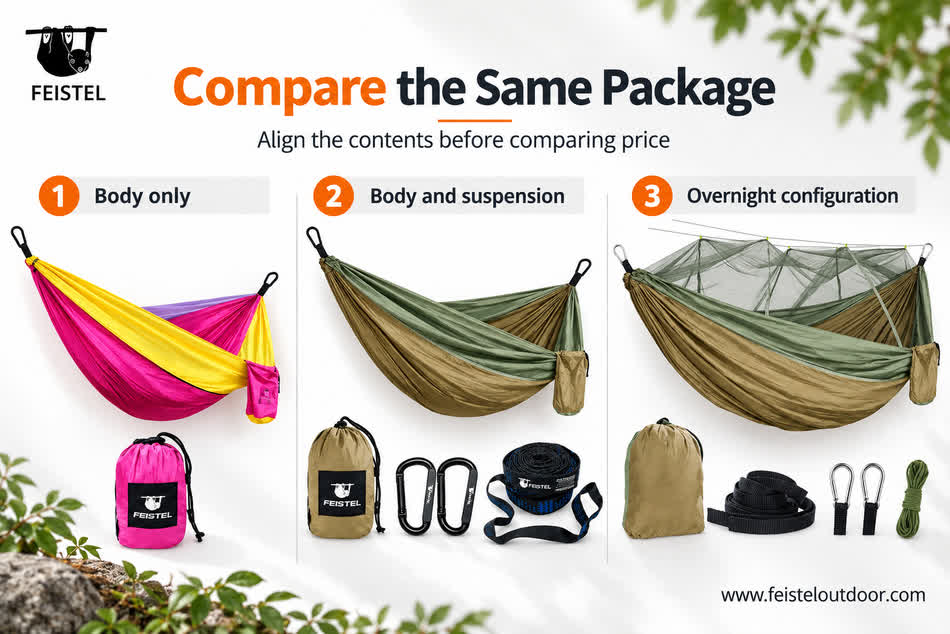
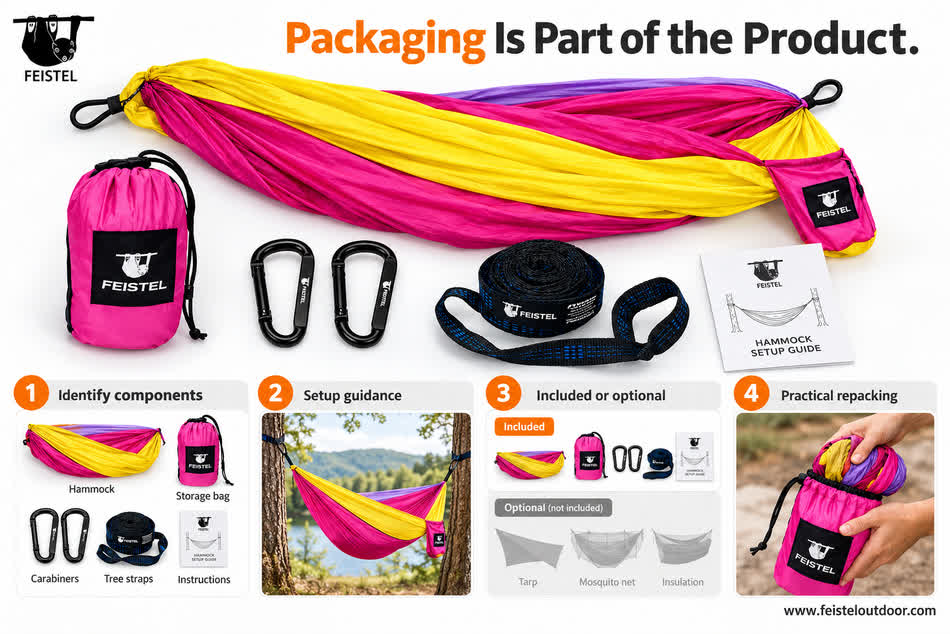
A hammock with a lower price tag may be sold without the suspension hardware needed to use it. Another may include straps, connectors and a carry bag. A third may add insect or weather protection. Unless the packages are compared accurately, price alone is a poor guide to value.
Begin with the intended activity. For occasional daytime rest, a simple bed and appropriate suspension may be enough. For overnight camping, list the necessary net, tarp and insulation before comparing total costs. Consider whether the accessories already owned by the camper are compatible.
Fabric width and layer count can affect material use and manufacturing cost, but they are not the only drivers. Textile grade, sewing complexity, hardware, packaging and order volume also matter. A wide single-layer nylon hammock may be simpler to produce than a smaller integrated shelter with multiple openings and components.
For wholesale buyers, request quotations against the same approved specification and clearly identify the supplied set. Unit price comparisons become much more useful once differences in fabric, accessories and packaging are transparent. The least expensive isolated product is not always the most economical system for the intended user.
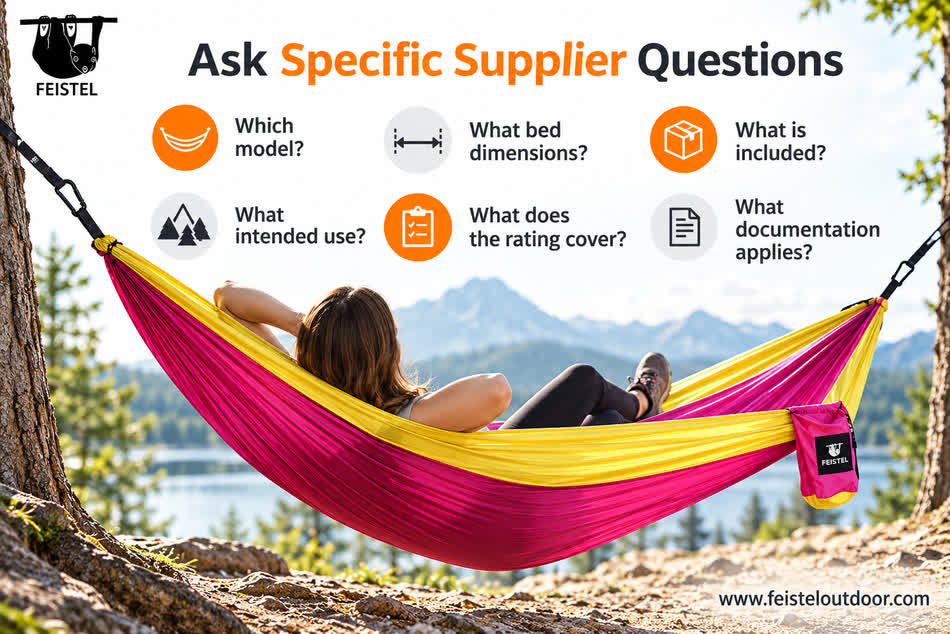
A useful specification sheet begins with an exact model reference and clear product images that match the supplied configuration. It should identify open fabric dimensions, construction type, textile, included suspension, full packing details and any claimed load rating. If accessories are optional, they should be separated from the standard package.
Check which weight is being quoted. Is it the bare fabric body, the packed retail item or the whole overnight system? Confirm whether a length measurement describes the bed itself or a larger assembly. If the title says double, look for actual width and permitted shared use. If it says double-layer, look for details about the second fabric and whether a pad pocket exists.
Load-related figures deserve particular care. The rating should be traceable to the relevant model and conditions where documentation is important. A fabric-only test cannot automatically verify all straps and connectors supplied with a finished package.
An effective procurement process treats this sheet as the control document. Sample approval, packaging artwork, instructions and production should refer to the same revision. That discipline matters more than lengthy promotional language because it reduces the chance of different teams expecting different products.
Capacity claims can appear prominently on a product page, yet the supporting evidence may be difficult to find. A buyer should identify the exact model, test method where applicable, tested configuration and included load-bearing components before relying on a rating for important commercial decisions.
Some tests apply a defined static load; others examine repeated loading or component strength. The existence of one test does not prove every other mode of use. A hammock that can support a carefully applied mass should not be treated as approved for jumping, swinging aggressively or being installed far above the ground.
The supporting anchors are another variable. No printed capacity makes an unsuitable tree, railing or improvised post appropriate. Users remain responsible for following the installation instructions and local restrictions.
FEISTEL's product pages contain helpful descriptive information, but this guide does not claim to have independently verified every figure. Where a product page contains inconsistent entries, the buyer should request a current signed specification rather than choose whichever number looks strongest. That is a more reliable basis for private-label packaging and long-term customer trust.
A good sample evaluation should reproduce the intended use, not merely confirm that the fabric looks correct on a table. Start by checking dimensions, stitch quality, loops, straps, connectors and the carry bag against the specification. Follow the installation instructions and select appropriate permitted anchors.
Try entering and leaving the hammock several times. Lie along the centerline, then experiment with a diagonal position. Notice where fabric rises around the shoulders and whether a tension ridge develops beneath the legs. If the hammock is intended for sleeping, spend a meaningful period in it rather than relying on a two-minute demonstration.
Next test the accessories. Can the bug net be opened from inside? Does the intended pad fit? Can the underquilt be adjusted without creating large gaps? Is there enough tarp coverage for the chosen bed? Can the whole system be packed again without excessive effort?
Keep subjective comfort notes separate from engineering results. A personal trial can identify fit preferences and usability problems; it cannot establish a certified weight rating or a guaranteed service life. Documenting those distinctions helps the product team make honest improvements and protects customers from unsupported promises.
Commercial sampling needs a defined brief. The buyer and manufacturer should agree on the target user, model dimensions, fabric construction, suspension components, accessories, packaging and required evidence before creating the sample. Otherwise, a product can look attractive while failing to match the intended retail offer.
During inspection, verify each major requirement. Measure the bed, confirm the fabric designation and review end connections. Check how the hammock packs with all supplied accessories. If a double-layer model is intended to hold a sleeping pad, test the actual pocket with the proposed pad dimensions. If mosquito netting is included, inspect openings and closures.
Changes after sample approval should be recorded. Substituting a connector, fabric or seam arrangement may affect performance even when the product photographs remain similar. Any required verification should apply to the final approved configuration rather than an earlier prototype.
At FEISTEL, we recommend keeping this process transparent. It is more credible to describe a proposed evaluation procedure than to invent a completed three-month engineering trial. Genuine test records and customer feedback can later become valuable original content when collected and documented systematically.
Several errors repeat because buyers put too much weight on short product labels. A “double” name does not guarantee comfortable two-person overnight sleep. A “double-layer” name does not guarantee warmth, stronger capacity or a compatible pad sleeve. A “lightweight” label may exclude essential accessories from the quoted mass.
Material terms can mislead as well. A 210T textile description is not a finished strength rating, and the word ripstop does not mean a fabric cannot tear. Product photographs may conceal actual bed length or show the hammock attached to anchors that are unsuitable elsewhere.
Another mistake is choosing a hammock before checking the campsite. Without approved, suitable anchors, a tree-suspended model cannot be used as planned. Ignoring nighttime temperature can also turn a comfortable afternoon lounge into a cold overnight experience.
The solution is not to memorize more technical terms. Start with intended use, then verify size, system components, protection, installation and documented restrictions. This buying sequence handles most of the confusion without pretending that one product wins for every camper. It also creates more realistic expectations about what arrives in the package.
Cleaning guidance should follow the actual fabric, coating and hardware supplied with the hammock. Before washing, remove loose debris and inspect the product for damage. Some hardware may need to be detached if the manufacturer recommends it. Harsh chemicals and high temperatures should not be assumed safe for every textile or finish.
After use in sand or wet conditions, pay attention to straps, loops and metal connections. Dirt trapped in hardware can interfere with smooth handling, while moisture left in a packed bag can make storage unpleasant. Dry the hammock appropriately before extended enclosed storage unless its instructions say otherwise.
A double-layer bed may require additional attention because moisture can remain between fabrics. A tightly packed hammock may need to be opened fully to dry. A mosquito net should be treated gently to avoid snagging the mesh or zipper.
Maintenance also provides an opportunity for inspection. Check whether stitching has loosened, whether fabric has been abraded and whether load-bearing straps are cut or worn. Cleaning is not a substitute for replacing compromised components. A product that appears clean may still be unsuitable for use if its structural elements are damaged.
A compact carry bag is useful during travel, but long-term storage should reflect the hammock's materials and actual condition. Clean off dirt, allow the equipment to dry appropriately and avoid unnecessary exposure to sunlight, chemicals and sharp objects. Organize straps and connectors so they can be inspected rather than forgotten at the bottom of a bag.
Do not infer a universal shelf life from nylon, polyester or cotton alone. Aging depends on material formulation, environmental exposure, loading history and care. A hammock stored indoors after occasional use has a different history from one left outside every day at a resort.
For products with integrated mosquito netting, protect mesh from snagging and keep zippers free of debris. If a double-layer pocket became wet, confirm it has dried before leaving the hammock packed for a long time. Accessories containing insulation may have different storage instructions from the fabric bed itself.
At FEISTEL, we favor practical inspection and storage advice over a fixed, unverified promise of years of service. A useful care guide explains what the user can check and what conditions to avoid. It should not invent the result of a test that was never performed.
A hammock should not remain in use simply because most of the fabric still looks good. Load-bearing elements can become damaged locally. Cuts in suspension webbing, torn stitching, deformed connectors, compromised loops or significant fabric abrasion deserve attention. If the user is uncertain about the integrity of a structural component, continued use should not be assumed safe.
Visual inspection cannot reveal every form of damage or prove remaining capacity. That is one reason manufacturers should provide care and replacement guidance matched to the model. A consumer should not attempt improvised structural repair with ordinary household materials and assume the original rating still applies.
Commercial operators may need a consistent inspection and withdrawal procedure because multiple people use the equipment and staff may not know the full loading history. Records of installation, maintenance and replacement can help manage those circumstances.
A rigid calendar rule such as “replace every three years” cannot be imposed universally without evidence and context. Frequency of use, exposure and documented condition all vary. The conservative choice is to stop using equipment that shows concerning structural damage or does not meet the manufacturer's instructions, rather than relying on a marketing promise of lifetime durability.
Hammock convenience should not come at the cost of damaged trees or unsuitable installation. Follow park regulations and land-manager requirements, which may govern whether hanging is permitted and what kinds of straps may be used. Some sensitive areas prohibit hammocks regardless of the equipment's quality.
Wide webbing can distribute force across more contact area than a thin cord under comparable loading, but the actual effect depends on tree condition, bark, movement and the way the strap is installed. Describing any strap as universally harmless would be misleading. Avoid unhealthy, damaged or very small trees and never attach to structures not designed for occupant loads.
Consider the surrounding campsite as well. Keep pathways clear of lines and avoid disturbing vegetation unnecessarily. If suitable anchors are not available, change the camping plan rather than forcing the installation.
Environmental care also includes product maintenance. Repairability, proper storage and accurate replacement-part information may reduce avoidable disposal, but broad sustainability claims require evidence. At FEISTEL, we would rather give specific, responsible use advice than claim that a hammock is environmentally friendly merely because it is made from a familiar fiber.
A hammock is a suspended load-bearing product. Appropriate capacity, sound anchors and correct installation are essential. Read the product's limitations before use, inspect visible components and avoid jumping, rough swinging or installation at unnecessary heights. The hammock should be positioned so that entry and exit are practical and the consequences of a fall are minimized.
Do not use decorative hooks, railings or posts whose ability to support hammock loads has not been established. Do not assume the supplied straps are appropriate for any tree or that all carabiners are interchangeable. The equipment works as one system.
Children require suitable supervision and product-specific guidance. A wide bed that appears able to accommodate several bodies is not permission to exceed its intended occupant count or rated load. Shared use can produce movement that affects other occupants, even before a structural limit is reached.
A product's safety instructions should be clear enough for a new user to understand. Where a manufacturer publishes an important performance claim, it should be supported by documentation relevant to the exact configuration. Product choice is more responsible when safe use is considered alongside comfort, price and weight rather than treated as a footnote.
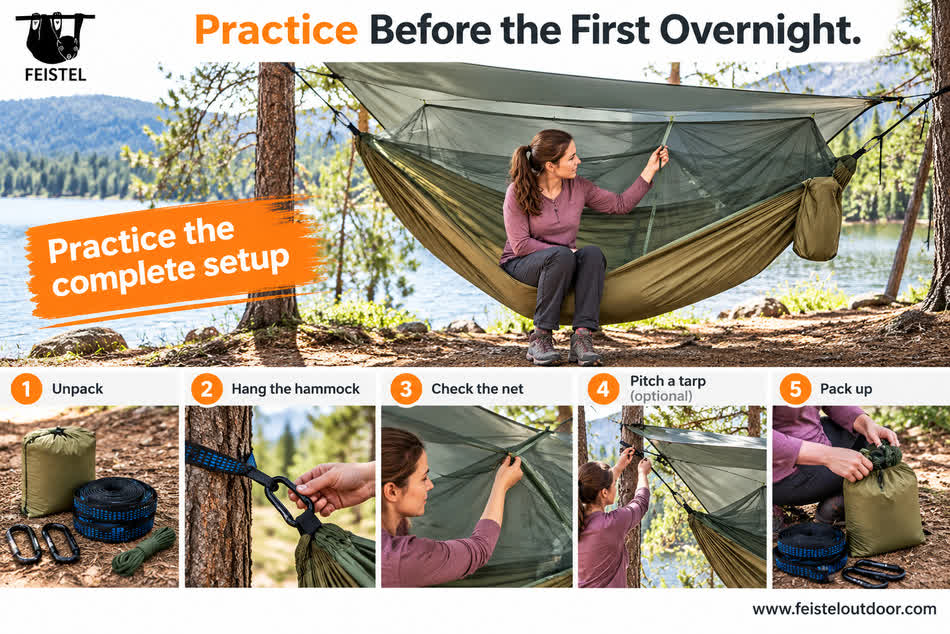
The first attempt at building a sleeping shelter should not happen in darkness at a remote campsite. Practice the full arrangement near home or in a suitable controlled setting. Hang the hammock according to its instructions, inspect the anchors and adjust the occupied height before adding other components.
Next work on sleeping comfort. Try the diagonal lay, note whether the shoulders feel crowded and check for tension beneath the calves. If a pad is used, see whether it stays in position when the sleeper moves. If there is an underquilt, adjust it until there are no obvious gaps. Practice opening the mosquito net without letting the fabric snag.
Install the rain tarp as well. Understand where its lines run, how the coverage changes with the pitch and how to pack wet equipment separately when necessary. Then repack the entire system with the accessories that will actually travel.
One successful daytime hang is not an overnight guarantee. An extended trial can reveal thermal, storage or access issues that a quick demonstration misses. The value of practice is not that it makes every hammock perfect, but that it separates setup problems from genuine limitations of the chosen design.
When a customer approaches FEISTEL about a customized hammock, the useful starting point is a clear description of the intended users and environment. Does the product need to fit solo hikers, couples relaxing at camp, or resort guests? Will it be carried over distance? Is it meant for fair-weather use or part of an overnight shelter? Those answers guide dimensions, materials and accessories.
The next step is to convert the idea into a technical brief. Open fabric dimensions, layer count, fabric type, seam arrangement, strap length, connectors, packaging and performance requirements should be defined separately. If a double-layer body is requested, clarify whether its purpose is stretch control, pad management or another design objective. Those functions require different details.
Sample evaluation should then compare the actual product with the approved brief. Check the geometry in use, confirm accessory compatibility and review any relevant testing or inspection requirements. If a fabric or connector changes after approval, the implications should be assessed before production.
This discussion is about a responsible development process, not a claim that any particular internal FEISTEL experiment has already taken place. Useful first-party content comes from traceable manufacturing decisions and records. It should not require invented customer percentages or imaginary sales trends.
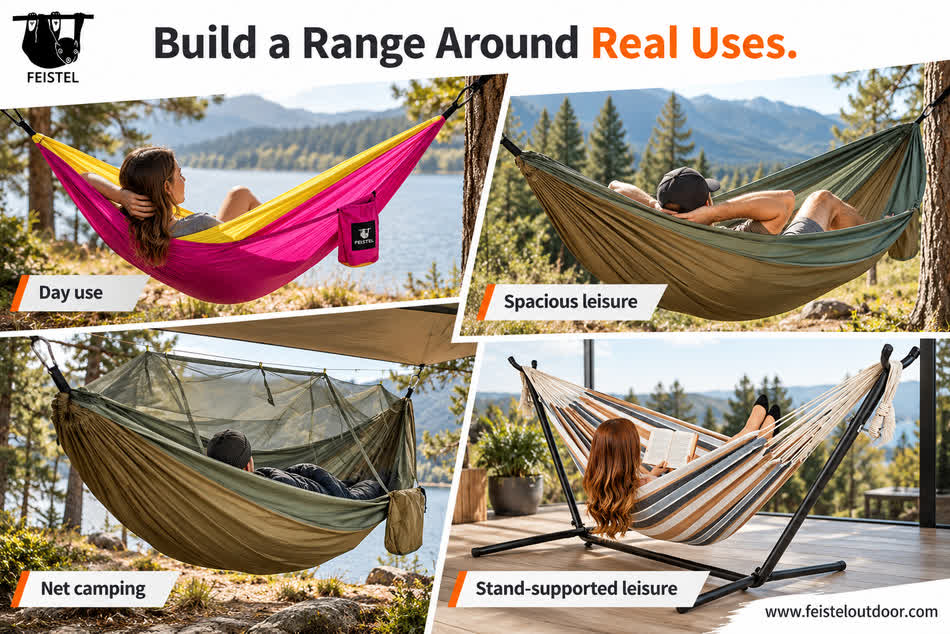
A retailer may sell one hammock successfully and still find that it does not meet every customer's needs. A well-organized range can separate compact day-use models, spacious portable beds, insect-conscious camping systems and stand-supported leisure products. The differences should be meaningful, not just new colors attached to nearly identical constructions.
One question is whether customers understand the package. If a lightweight bed is sold without its suspension, the listing should make that clear. If a net hammock includes specific straps, the images and specification should agree. A double-layer product should explain whether a pad compartment exists. A stand-supported model should be represented with its actual transport and setup requirements.
Retail buyers can use customer questions to improve their descriptions. Repeated confusion about the word double may indicate a need for a size diagram. Questions about overnight warmth may indicate that required insulation has not been explained clearly. These are suggestions for information to collect, not statistics about FEISTEL customers.
The best assortment serves distinct activities and gives buyers an honest way to choose. Product differentiation should follow the problems customers face rather than trying to invent a universal premium tier based on width or layer count alone.
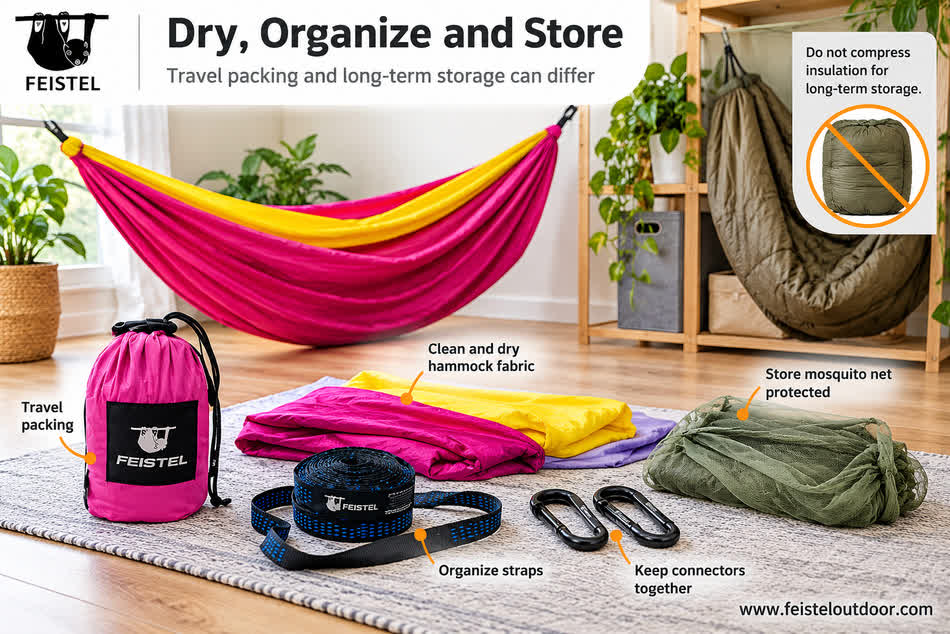
Packaging may seem separate from hammock comfort, yet it shapes the user's first and last interactions with the equipment. A tiny stuff sack is impressive in a photograph but may become frustrating when the user tries to repack fabric after a damp afternoon outdoors. Straps left loose inside the bag may carry dirt onto the bed. Hardware without clear storage can be difficult to inspect before the next use.
A good package should match the actual supplied set. The instructions should name the components, show appropriate hanging principles and state important restrictions. Where accessories are optional, photographs should not make them appear included. Buyers should also be able to distinguish a double-width hammock from a double-layer construction without deciphering an ambiguous product title.
For a private-label project, the final packed dimensions and package contents should be checked against the approved sample. Changes in the carry bag can affect carton volume and customer convenience even when the bed itself stays unchanged.
At FEISTEL, we recommend discussing packaging during product development rather than leaving it until the final artwork stage. A user-friendly set is one whose components are identifiable, easy to handle and honestly described.
Broad questions tend to produce broad answers. “Is this hammock strong?” or “Is it comfortable?” are understandable starting points, but not enough for a sourcing decision. Ask which model is being discussed, what the open fabric dimensions are, which material is used and what components the package contains.
For comfort, ask the target user-height range and whether the product is designed for overnight sleep or casual lounging. For load, ask what the stated rating covers and whether corresponding documentation is available. For fabric layers, ask whether the second layer is load-bearing, whether it has an opening and which pads are compatible. For a mosquito-net version, ask about closures and mesh arrangement. For a stand, ask about the assembled footprint and its operating instructions.
These details allow the buyer to compare quotations based on identical requirements. If two suppliers quote different accessories, the cheaper number may not represent the same product. If a prototype uses different hardware from the final shipment, its approval may no longer describe the supplied configuration.
Good technical communication is not about using the longest list of jargon. It is about reducing uncertainty around a real product that someone will carry, install and trust outdoors.
When we at FEISTEL discuss hammock fabrics, we want buyers to look beyond appearance, texture and denier. Chemical-substance screening is another part of a responsible material review. We have a third-party test report issued to ANHUI FEISTEL OUTDOOR PRODUCT CO., LTD for a submitted product identified as “Hammock with Tarp.” The report, numbered XNO250520423EX1-1, was issued on May 26, 2025, by Guangzhou Supreme Technology & Testing Service Co., Ltd. The sample was received on May 20 and tested between May 20 and May 26, 2025.
The laboratory screened the submitted non-metallic material for 247 Substances of Very High Concern (SVHC) from the ECHA Candidate List as it stood on January 21, 2025. The report records a PASS conclusion: within the stated scope and analytical methods, concentrations of the screened SVHC were below 0.1% by weight in the submitted sample. In the detailed results table, the tested SVHC are recorded as N.D., meaning below the applicable reporting limit, rather than proven to be entirely absent.
We consider this useful, traceable evidence about the submitted sample. It gives a procurement team a report number, a dated list of substances, an identified applicant and a stated analytical scope instead of a vague “eco-friendly” claim. It does not mean that every hammock in our catalog, every accessory or every future production batch has undergone the same test. Nor does it mean that the specimen has been tested for load capacity, seam strength, waterproofness or sleep comfort.
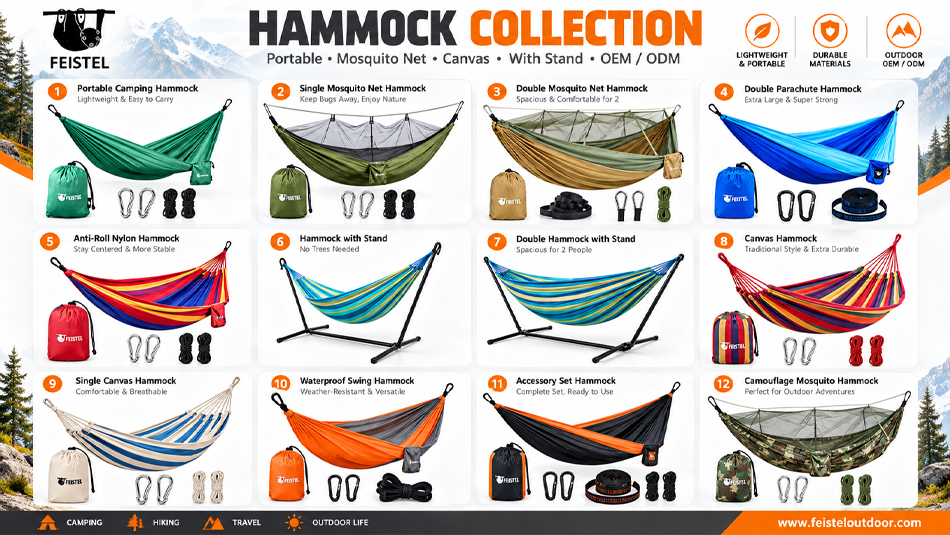
kategorier
ny blogg
Merke : ANHUI FEISTEL FACTORY Relatert produksjon : OEM & ODM Produkt : Et lett, lite, sammenleggbart piknikbord perfekt for utendørsaktiviteter. Laget av slitesterke materialer, er den bærbar, enkel å sette opp.
Merke : ANHUI FEISTEL-FABRIKKEN Relatert produksjon : OEM og ODM Produkt : Den spesialtilpassede, lette, sammenleggbare månestolen i metall og jern tilbyr slitesterk støtte og komfort, ideell for utendørs camping, med et kompakt, bærbart design for enkel transport og oppbevaring.
Merke : ANHUI FEISTEL FACTORY Relatert produksjon : OEM & ODM Produkt : Utendørs bærbart sammenleggbart Roll Up piknikbord: Lett, slitesterk aluminiumsdesign med justerbar høyde, enkelt oppsett og kompakt bæreveske for camping, piknik og utendørsaktiviteter.
Merke : ANHUI FEISTEL FACTORY Relatert produksjon : OEM & ODM Produkt : Et allsidig, bærbart IGT BBQ campingbord med justerbare høydeben. Ideell for utendørs matlaging, camping og piknik. Lett og sammenleggbar for enkel transport.
Merke : ANHUI FEISTEL FACTORY Relatert produksjon : OEM & ODM Produkt : Kompakt og lett sammenleggbart aluminiumsbord, perfekt for camping, strand eller utendørsaktiviteter. Lett å bære, solid og ideell for oppbevaring av mat og drikke.
Merke : ANHUI FEISTEL-FABRIKKEN Relatert produksjon : OEM og ODM Produkt : Denne sammenleggbare lenestolen i tre for camping har en solid ramme, ergonomisk tilbakelent design og kompakt sammenleggbar struktur – perfekt for avslapning på stranden, campingplassen eller i hagen.
Merke : ANHUI FEISTEL-FABRIKKEN Relatert produksjon : OEM og ODM Produkt : Denne sammenleggbare campingstolen med aluminiumsramme for utendørs bruk har justerbar ryggstøtte, et lett, men solid design, og tilbyr bærbar komfort for camping, strandturer, piknik og avslapning utendørs.
Merke : ANHUI FEISTEL-FABRIKKEN Relatert produksjon : OEM og ODM Produkt : Minikrakken for turgåing kombinerer et slitesterkt, sammenleggbart design i Oxford-stoff med en kreativ lomme til penal, noe som gir bærbarhet, komfort og praktisk funksjonalitet for camping og utendørseventyr.
Merke : ANHUI FEISTEL-FABRIKKEN Relatert produksjon : OEM og ODM Produkt : Reisesengen for turutstyr i engros er en sammenleggbar campingseng med justerbar høyde som gir solid støtte, enkel bærbarhet og komfortabel hvile for utendørseventyr.
Merke : ANHUI FEISTEL FACTORY Relatert produksjon : OEM & ODM Produkt : En utendørs ultralett enkel kompakt bærbar sammenleggbar campingseng ideell for backpacking, med en slitesterk ramme, enkelt oppsett og en praktisk bæreveske for reiser.
LA OSS HOLDE KONTAKT :